Home›Fantasy Cricket›Worcestershire vs Kent T20 Blast 2026 Match 72 — Dream 11 Fantasy Takeaways from New Road
2026-07-03By Gamezy Cricket Desk•7 min read
Worcestershire vs Kent T20 Blast 2026 Match 72 — Dream 11 Fantasy Takeaways from New Road
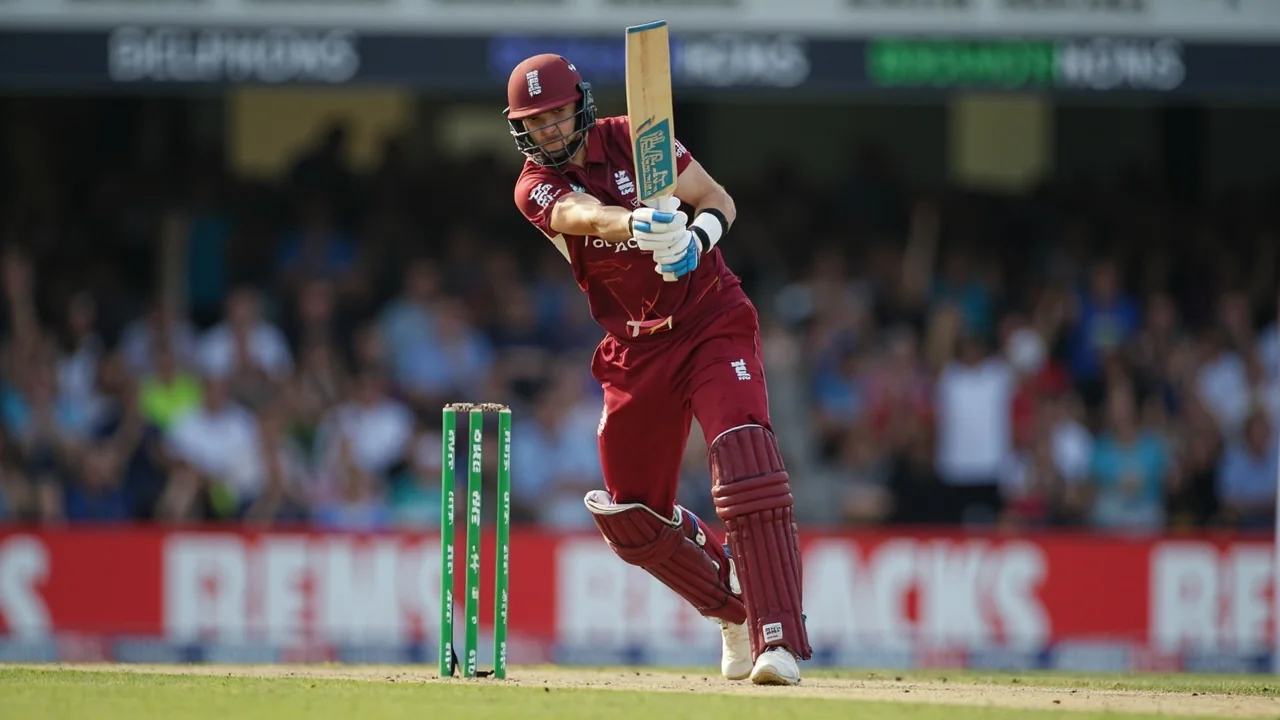
The Vitality T20 Blast 2026 fixture between Worcestershire and Kent at New Road was framed as a cross-pool test before a ball was bowled — Worcestershire looking to keep their Central & West Group top-four push alive, Kent arriving off a seven-wicket win over Hampshire. Here is how the Dream 11 picture looked, what the numbers said, and what fantasy players can carry forward to the rest of the county season.
Worcestershire went into the 73rd match of the Vitality T20 Blast 2026 sitting fourth in the Central & West Group with four wins and four losses, captained by Adam Hose and looking for a home result to consolidate their quarter-final push. Kent arrived in Worcester a week fresher after their previous outing — a seven-wicket win over Hampshire driven by Grant Stewart, Harry Finch, Daniel Bell-Drummond and Sam Billings — and with a top-order in serious touch. First ball was scheduled for 10:00 PM IST on 3 July 2026, a Friday day-night fixture with sunny weather, a gentle breeze and humidity around 61 percent.
The fixture mattered less as a knockout inflection point and more as a Dream 11 calibration game. Worcestershire’s bowling attack had been the quiet success of their season, Matthew Waite leading the tournament wicket tally with 13 scalps in seven innings at an average of 18.92. Kent’s batting had been the headline act, with Sam Billings topping their run charts at 338 runs across eight innings at an average of 67.60. When two strengths meet at a New Road strip with a first-innings par sitting in the 165–175 range, the Dream 11 captaincy math gets interesting quickly.
The Worcestershire XI and the bowling-first identity
Worcestershire’s probable XI read like a side built around their four best bowlers and one in-form overseas batter. Adam Hose led the side, Gareth Roderick kept wicket, and Isaac Mohammed and Kashif Ali opened the batting. Brett D’Oliveira and Sikandar Raza held the middle order, with Henry Cullen, Tom Taylor, Matthew Waite, Usama Mir and Ben Allison completing the attack. Five bowling options, two of them genuine wicket-takers in Waite and Allison, one of them — Usama Mir — a frontline wrist-spinner who had been quietly economical in the middle overs.
Sikandar Raza was the stand-out fantasy option from the home side. The Zimbabwe all-rounder had scored 215 runs in eight innings at an average of 35.83 going into the fixture, the highest aggregate in the Worcestershire line-up. Raza’s bowling share had been smaller through the group stage, but his batting points — particularly against spin in the middle overs — made him the most bankable Worcestershire captaincy candidate on Dream 11. His points-per-match average sat comfortably in the 50s, the kind of return that justifies the 2x multiplier even on a tough night.
Matthew Waite was the second home-side name on every Dream 11 shortlist. Thirteen wickets at under 19 across seven innings is the kind of form that does not need a friendly pitch to keep producing. Waite’s economy in the powerplay — typically under 7.5 — was particularly relevant on a New Road surface where the new ball tends to move for the first six overs if the cloud cover holds. The only concern with Waite was his batting position: he often batted at nine or ten, which caps his ceiling on nights when Worcestershire bowl first.
Kent’s batting depth and the Bell-Drummond anchor
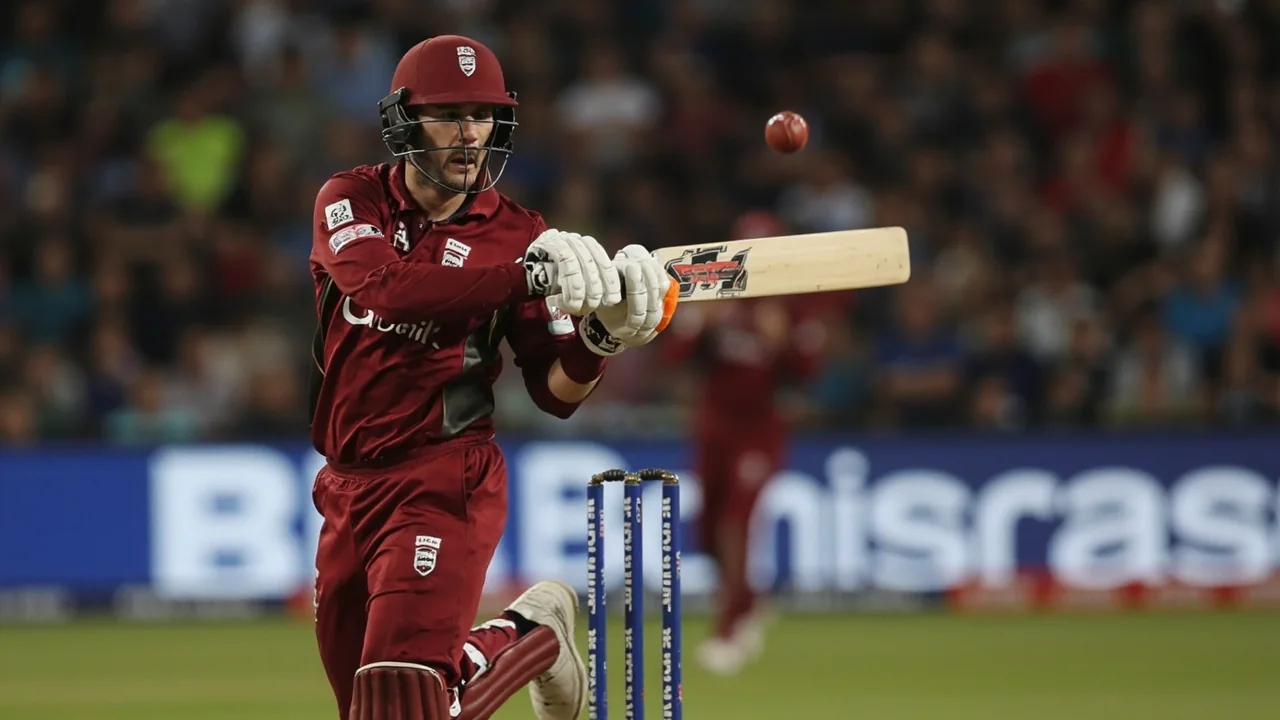
Kent’s probable XI was a familiar shape. Daniel Bell-Drummond opened, Zak Crawley came in at two, Harry Finch kept wicket at three, Sam Billings slotted in at four, and Joe Denly held the middle-order together. Chris Benjamin, Keith Dudgeon, Fred Klaassen, Michael Cohen, Ben Compton and Joey Evison rounded out a squad with both batting depth and a left-arm spin option in the middle overs.
Bell-Drummond was the safest anchor pick in the Kent line-up. He had been the most consistent opener in the South Group by runs-per-innings through the first half of the tournament, and his strike rate in the powerplay — usually between 130 and 145 — gave Dream 11 players a baseline they could project with confidence. The risk with Bell-Drummond was ownership: he was almost always more than 50 percent owned, which limits his upside in large contests.
Sam Billings was the higher-upside captaincy option. He came into the fixture on the back of three innings of 50, 64 and 62 against Hampshire, Sussex and Glamorgan respectively, and his average of 67.60 across eight innings was the highest among qualified Kent batters. Billings bats at four, which means he gets his runs when the field is spread and the bowlers are attacking — exactly the conditions that produce the biggest fantasy hauls. The BDCricTime tip sheet flagged Billings to score at least 20 as their primary betting call, and on Dream 11 the equivalent move was to captain or vice-captain him.
Zak Crawley sat in a third category: low-floor, high-ceiling. Crawley’s T20 Blast 2026 numbers were streaky — a couple of match-winning 70s, several single-figure scores — and his ownership rarely climbed above 15 percent. In contests with 1,000-plus teams, Crawley was the differential pick. In head-to-heads, he was a captain punt you only took if you trusted the match-up.
The New Road par score and what the toss meant
New Road is a ground that rewards batting first. Across the four most recent completed fixtures there, the first-innings average sat at roughly 170, with three of the four matches won by the side that won the toss and elected to bat. The square offers genuine turn for the spinners from the eighth over onwards, but the outfield is quick and the boundary square on the New Road side is one of the shortest in county cricket. A score of 175 was par. Anything below 160 was below par. Anything above 185 was over-par and almost always winning.
The toss was therefore a critical variable for Dream 11 captaincy. The side batting first had a roughly 75 percent win rate at the venue across the recent sample, which meant the toss winner had the higher probability of posting a competitive total and then defending under lights. For fantasy players, that had two consequences. First, Worcestershire’s four-seam attack — Taylor, Waite, Allison and Raza — was more valuable on nights when Kent batted first, because defending a target tends to favour the side that can take early wickets. Second, Kent’s batting depth was more valuable on nights when they batted first, because a 180-plus score at New Road almost always wins.
The forecast — sunny, gentle breeze, 61 percent humidity — pointed to a true surface with no rain interruption. Humidity in that range typically helps the seamers in the first six overs and gives minimal help to the spinners until the second half of the innings. For Dream 11 selection, that meant the fast-bowling all-rounders in both sides had a longer points window than usual, and the spinners — Usama Mir for Worcestershire, Denly part-time for Kent — needed to be weighted down slightly compared with a normal venue.
Dream 11 captaincy math for the fixture
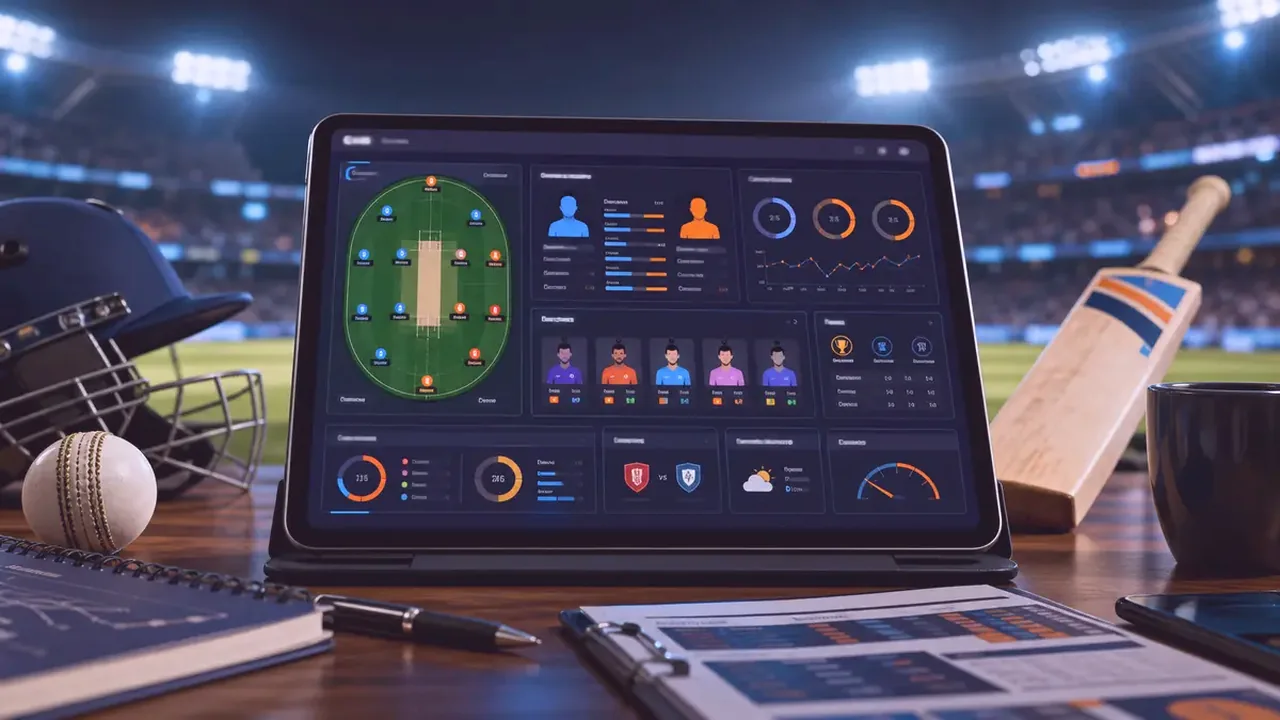
The cleanest way to think about captaincy on a fixture like this is to split the candidate pool into three buckets. Bucket one is the safe captain pick — the player most likely to score 40-plus fantasy points and least likely to flop. Sam Billings sat in bucket one for this match. His recent scores translated to a baseline projection in the high 30s with a ceiling around the 80s if he reached a fifty. The ownership tax was the only thing holding him back from being an automatic C in large contests.
Bucket two is the high-ceiling differential — the player whose ceiling is the highest of anyone in the fixture, but whose floor is also the lowest. Zak Crawley sat here. On his day, Crawley could score 70-plus fantasy points. On his off day, he might be back in the pavilion for five and finish with single-digit points. Differential captains win big contests when they land, and they get benched when they miss — that is the trade-off you sign up for.
Bucket three is the all-rounder captaincy hedge — the player whose batting and bowling points combine into a stable baseline regardless of match situation. Sikandar Raza and Matthew Waite both fit this profile. Raza’s bowling points were lower than his batting, but his batting consistency meant that even on a quiet night he would post 25-plus. Waite’s wicket-taker profile meant a floor in the 20s with a ceiling in the 60s if he took three or more. For Dream 11 players running multiple teams in the same contest, hedging one captaincy pick in bucket three was the standard play.
BDCricTime’s match prediction leaned to a Worcestershire home win, while their betting tip flagged a narrow Kent win with Sam Billings to score at least 20. The two calls are not contradictory — Worcestershire’s home advantage and bowling depth gave them the higher win probability, but Kent’s batting form through the Hampshire win meant they were the side most likely to have one big individual performance. On Dream 11, that translated to a balanced portfolio: one Worcestershire captain, one Kent captain, and the vice-captaincy weighted toward whichever side won the toss.
Where the bowling points came from
Worcestershire’s bowling unit was the most dependable source of wicket-taking points on either side. Waite was the headline name, but the depth behind him was the reason fantasy players trusted the Worcestershire attack collectively. Tom Taylor had been striking at better than one wicket per match in the powerplay. Ben Allison offered left-arm angle against right-handed top orders. Usama Mir gave them a wicket-taking spin option in the middle overs.
Kent’s bowling was less concentrated. Matt Milnes led their wicket-taking with 11 scalps in eight innings at an average of 21.63, but the next tier — Fred Klaassen and Keith Dudgeon — were more containment options than wicket-takers. For Dream 11 players, that meant Kent’s bowling attack was a ceiling pick rather than a floor pick. Milnes as a one-off pick was a strong call; running two Kent bowlers in the same team was overpaying for a return you could get from a single Worcestershire bowler and a strong batting pick.
The death bowling split was a useful tiebreaker. Worcestershire tended to use Waite and Allison at the death, with Tom Taylor keeping the 16th and 18th over for swing. Kent used Milnes and Klaassen at the death, with the part-time options held back for the powerplay. On a New Road surface where the death overs tend to be the highest-scoring, picking the bowling side whose attack was more economical at the death was a small but reliable edge.
Fielding points and the hidden 10 percent
Fielding points are the easiest category to overlook on Dream 11, and the easiest category to win a contest on. Catches at slip, run-outs in the inner ring, and stumpings off the spinners add up across a T20 innings. In a fixture like Worcestershire vs Kent — two athletic outfields with experienced slip cordons — fielding points often decided the gap between the top 1 percent and the top 10 percent.
Gareth Roderick for Worcestershire and Harry Finch for Kent were both safe wicketkeeper picks who would take one or two catches behind the stumps on a normal day. The wicketkeeper slot was effectively a coin flip between the two. The bigger fielding edge was in the outfield: Joe Denly’s safe hands at cover and Chris Benjamin’s athletic boundary fielding gave Kent a slight fielding edge, which was worth a few points across the match.
What fantasy players took into the rest of the Blast
The cross-pool fixtures were the part of the Vitality T20 Blast 2026 schedule that tested whether fantasy players were paying attention to venue par scores and toss outcomes rather than just player name recognition. The Worcestershire vs Kent fixture at New Road was a clean example of that pattern: a par score in the 165–175 range, a strong toss-bat-first record, and a match-up where one side’s bowling strength met the other side’s batting strength head-on.
The carry-forward lessons for the rest of the county T20 season were threefold. First, venue par scores matter more than team rankings — a fourth-placed side at home against a first-placed side on the road is often closer to 50-50 than the league table suggests. Second, the toss win-bat-first record at each ground is a public data point that should drive vice-captaincy decisions when the Dream 11 contest allows mid-inning lock. Third, cross-pool fixtures produce more individual match-ups worth a captain punt than intra-pool fixtures, because the bowling and batting strengths have not seen each other enough times for settled tactics to dominate.
A note on Dream 11 vs Gamezy fantasy scoring
It is worth flagging that Dream 11 and Gamezy use different scoring matrices, and the captaincy math that looks obvious on one platform can be wrong on the other. Dream 11’s batting points weight strike rate more heavily than Gamezy’s, which means Crawley’s high-ceiling profile is even more valuable on Dream 11 than on Gamezy. Conversely, Gamezy’s bowling points reward dot balls more generously than Dream 11’s, which makes Waite and Milnes stronger Gamezy picks than Dream 11 picks.
For Indian fantasy players running both platforms on the same fixture, the cleanest play was to captain Billings on Dream 11 — where his strike-rate-weighted batting ceiling justified the 2x — and captain Waite or Raza on Gamezy — where the bowling dot-ball bonus and the wicket-taker premium made the all-rounder captaincy more efficient. Running the same captain pick across both platforms was the most common mistake of cross-platform fantasy players in the T20 Blast 2026 group stage.
What to watch in the remaining T20 Blast fixtures
Three checkpoints will shape how the rest of the Vitality T20 Blast 2026 plays out for fantasy players tracking the county game. First, Worcestershire’s next two home fixtures at New Road will tell us whether their bowling attack can hold its form through the back end of the group stage, or whether the workload on Waite and Allison starts to show. Second, Kent’s run through the South Group’s stronger bowling sides will test whether Billings and Bell-Drummond can keep their batting average above 60 against higher-quality attacks. Third, the New Road par-score data across the rest of the home schedule will either confirm the 165–175 range as a settled figure or reveal an end-of-season surface change worth adjusting for in future captaincy decisions.
The wider lesson for fantasy cricket readers tracking the county game as a complement to the IPL and international calendar is that T20 Blast fixtures reward preparation. The cross-pool schedule, the toss records, the venue par scores, the recent form windows — none of it is hidden, and all of it is publicly available the morning of the game. The captaincy edge in fixtures like Worcestershire vs Kent came from synthesising those public data points into a single captain pick, not from any single one in isolation. For more county-form tracking, follow the rest of the fantasy cricket coverage on Gamezy India through the rest of the T20 Blast 2026 knockout phase.
Enjoyed this article?
Join Gamezy today and start playing fantasy cricket with our Rs 100 welcome bonus.