2026-07-19By Gamezy Fantasy Desk•Retrospective•9 min read
India vs England 3rd ODI at Lord’s — Fantasy Captain, Vice-Captain and Pitch Notes from 19 July 2026
On 19 July 2026, India and England walked into a series-deciding third ODI at Lord’s after England’s four-wicket reply in the previous match. This retrospective rebuilds the fantasy brief that sat on desks that morning — captain lean, pitch lean, predicted XIs and the toss-and-bowl home edge — using only the verified pre-match record from that day.
#Fantasy Tips#IND vs ENG#Lord’s#ODI
The fixture was simple on paper and heavy in the room. India versus England, third ODI of the tour, Lord’s, London, 11:00 AM local and 3:30 PM IST. England had levelled the series with a four-wicket win powered by Joe Root’s unbeaten 99. Virat Kohli had answered with 66 in that same game, his cleanest outing of the series to that point. Off the field, talk that Rohit Sharma might retire after the Lord’s match put extra weight on India’s opening partnership. For fantasy builds, those three facts — Root’s form spike, Kohli’s return, and Rohit’s pressure window — set the shortlist before anyone looked at the slope.
What follows is not a live preview dressed up as current news. It is a dated reconstruction of the selection logic that applied on 19 July 2026, drawn from the pre-match dossier published that morning by The Sunday Guardian. Scores after the first ball, final XI changes on the day, and post-match verdicts sit outside this brief. The value is in how the pitch, the predicted sides and the captain math fitted together before the toss.
Match frame that locked the slate
Series-deciders compress ownership. When both sides can still win the rubber, public captain percentages cluster around the two best batters from the previous game and the home new-ball pair. On this slate that meant Kohli and Root for the batting multipliers, Bumrah for the bowling alternate, and a bowl-first toss lean that pushed allrounders and top-order chasers up the order if England won the coin.
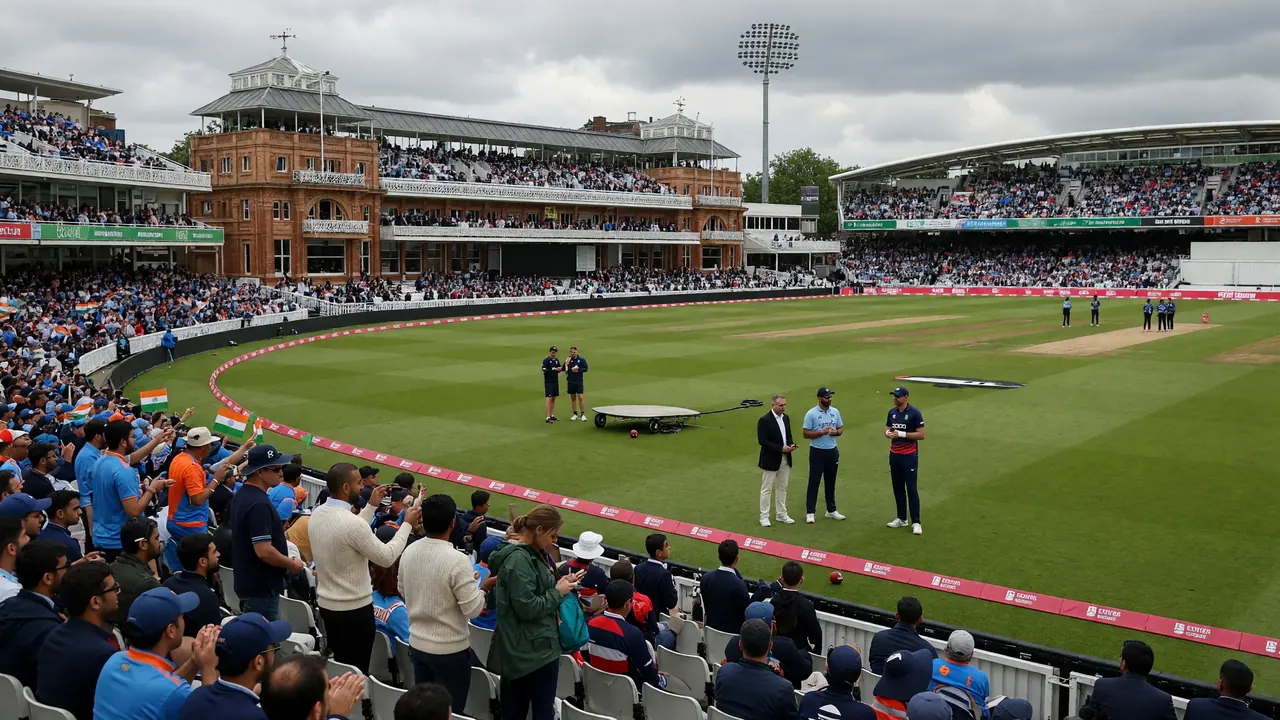
The venue mattered as much as the form lines. Lord’s in that stretch of the English summer had been read as a surface that still offered early seam, enough carry for the quicks, and the familiar slope that changes the angle of a good length ball from the Pavilion and Nursery ends. Longer straight boundaries and shorter square ones rewarded batters who hit through the arc rather than straight down the ground early. The pre-match pitch note said the side that won the toss would be inclined to bowl first. That single sentence did more to shape fantasy stacks than any head-to-head table.
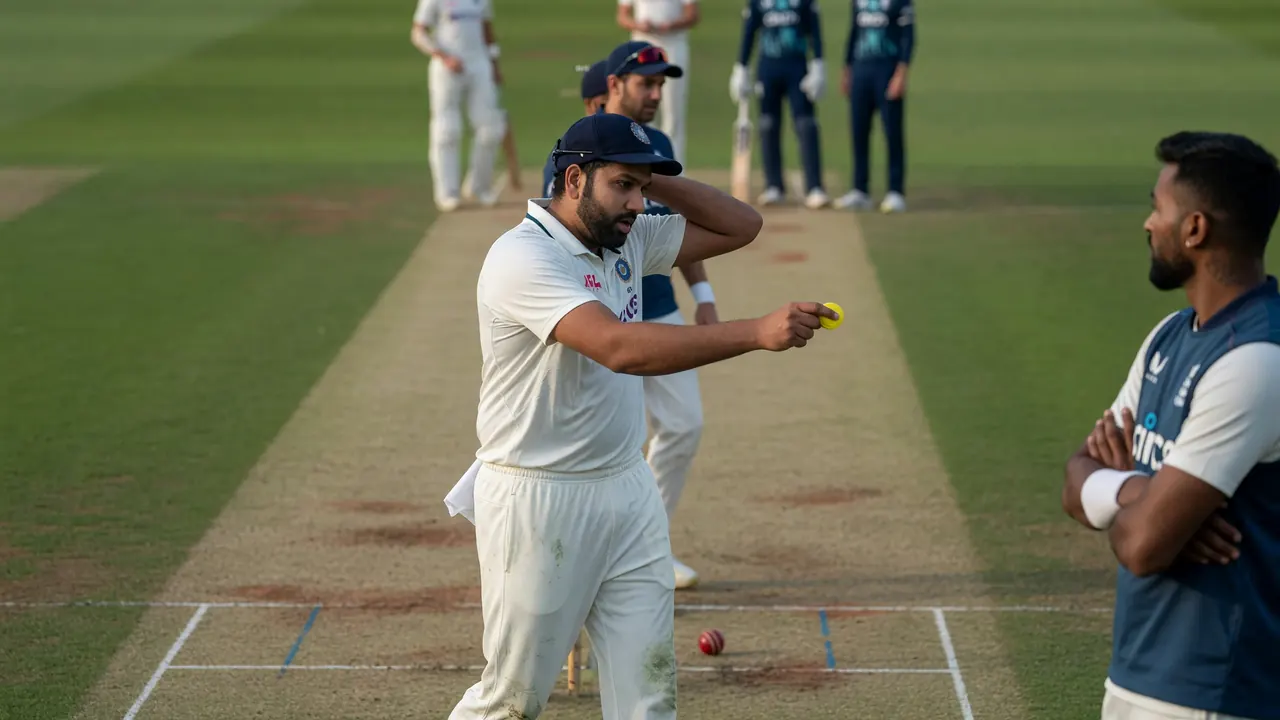
India’s dressing-room noise was part of the same frame. Speculation that Rohit might walk away after Lord’s sat beside a lean series with the bat. Fantasy players who still locked him did so for role security at the top, not for form. Those who faded him shifted salary into Gill, Kohli or a second England seamer. Either path was defensible on the morning of 19 July; neither path could ignore the pressure narrative, because pressure changes shot selection in the first ten overs of a decider.
Lord’s pitch read, without the mythology
The pitch conversation around Lord’s often drifts into lore. The usable notes for fantasy that morning were narrower. Recent surfaces at the ground had been questioned for leaning toward the bowling side. Seamers could expect lateral movement with the new ball. The slope opened bowling angles once the ball was on a hard length. Straight hits had further to travel than square hits, which raised the cost of mistimed lofted shots in the first powerplay and rewarded placement into the shorter square pockets once a batter was set.
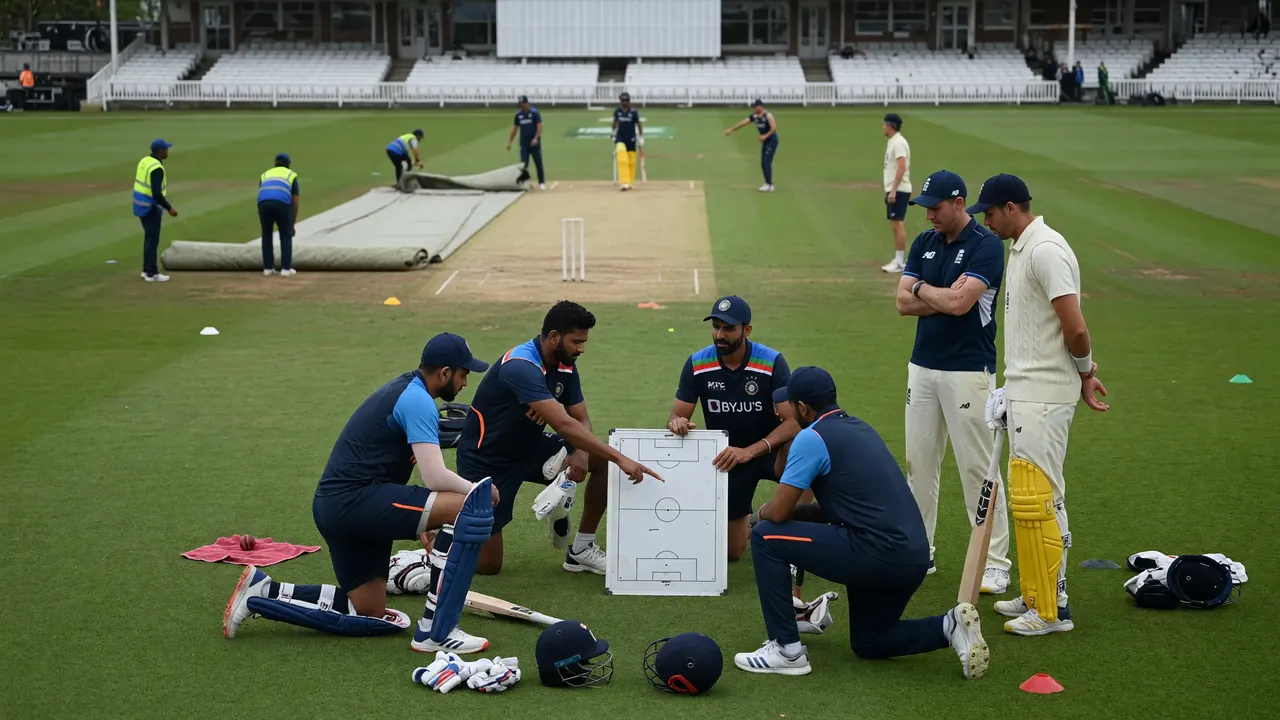
For team construction, that translated into three practical rules. First, openers and first-drop batters carried more variance than middle-order accumulators if the new ball moved. Second, the first-change seamer and the death option both stayed in the mix even on a “batting day,” because early wickets and late overs still paid on ODI scoring. Third, the spin duo — Kuldeep for India, Adil Rashid for England on the predicted XIs — needed a middle-overs role rather than a pure wicket-taking leap of faith. Lord’s rarely becomes a square turner in July; it becomes a surface where wrist-spin buys dots and the odd false shot against a set right-hander.
The bowl-first toss lean also changed captain timing. On many Indian venues, captaincy defaults to the side batting first. At Lord’s that morning, the smarter pre-toss default was the batter most likely to face a chase under lights-adjacent afternoon conditions, or the bowler most likely to operate with the new ball if the coin fell the home side’s way. That is why Root’s vice-captain case and Bumrah’s alternate case both survived the same pitch paragraph.
Predicted XIs and what they told fantasy builders
The predicted India XI read: Shubman Gill (captain), Rohit Sharma, Virat Kohli, Shreyas Iyer, KL Rahul (wicketkeeper), Axar Patel, Shivam Dube, Kuldeep Yadav, Gurnoor Brar, Jasprit Bumrah, Prasidh Krishna. The predicted England XI read: Ben Duckett, Jacob Bethell, Joe Root, Harry Brook (captain), Jos Buttler (wicketkeeper), Sam Curran, Will Jacks, Gus Atkinson, Jofra Archer, Adil Rashid, Saqib Mahmood.
Those lists were forecasts, not confirmed team sheets. They still carried structure. India balanced three specialist quicks with Axar’s left-arm control and Kuldeep’s wrist-spin, while Dube’s allround slot gave a sixth bowling option and a middle-order left-hand hitting gear. England stacked pace through Archer, Atkinson and Mahmood, kept Rashid as the single specialist spinner, and used Curran and Jacks as the flex seam-spin bridge. Fantasy salary maps that morning had to respect those shapes: India had more bowling shares to spread; England had a cleaner top-order batting core once Root and Brook were locked.
Two selection tensions sat inside the Indian list. Gill’s captaincy locked his place and his opening role, which kept his floor high even if his ceiling trailed Kohli’s. Rohit’s uncertain series form made him the first fade candidate in grand leagues, yet his opening slot still punched above mid-order differentials in small leagues. On the England side, Bethell’s inclusion at the top raised the left-hander count against India’s right-arm quicks and Axar, while Duckett’s square-of-the-wicket game fitted the shorter square boundaries better than a pure straight-hitter.
Captain shortlist: Kohli first, Root close behind
The top captain choice on the verified pre-match brief was Virat Kohli. The case was straightforward. He had just scored 66 in the previous ODI, ending a quieter run, and his long ODI record under chase and set-total pressure remained the cleanest on either side. At Lord’s, with early seam in play, Kohli’s value was not a reckless powerplay blast. It was survival through the moving ball and conversion once the ball got older — the exact profile that turns a 40 into an 80 and swings a 2x multiplier.
Joe Root was the top vice-captain choice, and on many builds he was the better true captain if England chased. Root’s unbeaten 99 in the previous game was the single strongest individual performance of the series to that point. He bats with the kind of control Lord’s rewards: late hands, square placement, and a low false-shot rate against both seam and spin. In ODI fantasy scoring, that profile prints consistent 70–90 point outings more often than boom-or-bust openers. When public ownership clustered on Kohli, Root at vice-captain or differential captain was the ownership lever.
Harry Brook, as England captain in the predicted XI, sat one tier below those two for multiplier duty. Brook’s ceiling in English conditions is obvious; his floor in a moving new-ball spell is lower than Root’s. Fantasy players who wanted England exposure without doubling Root often used Brook as a standard batter and kept the 2x on Root or Kohli. Gill followed a similar logic for India: essential in the XI, less essential as captain unless the grand-league field was saturated with Kohli.
Bumrah as the bowling alternate
Jasprit Bumrah was listed as the alternate captain or vice-captain route, and the numbers behind that call were modest but pointed. Since returning to ODIs after almost three years, he had taken two wickets for 76 runs across two games and added 20 with the bat in the previous match. Leading-pacer status on a bowl-first Lord’s surface mattered more than the raw wicket tally. If England won the toss and bowled, Bumrah’s first spell still had to open the Indian defence later; if India bowled first, he had the new ball in the best window of the day.
For fantasy builds, Bumrah worked three ways. In small leagues, he was a high-floor seam lock rather than a captain. In grand leagues, he became a viable 2x only when ownership on Kohli and Root looked extreme and the pitch note still screamed early seam. In multi-team portfolios, he was the pivot: captain Bumrah in one line, vice-captain Bumrah behind Kohli in another, and plain inclusion behind Root in a third. Prasidh Krishna and Gurnoor Brar, on the predicted Indian attack, were the cheaper seam partners rather than multiplier candidates. On the England side, Archer carried the closest equivalent ceiling if the toss-and-bowl plan landed.
How the toss lean rewired the rest of the XI
The toss prediction on the morning brief was England to win the coin and bowl first. Whether that call landed is outside this retrospective’s scope. The selection implication at the time was not. A bowl-first England side elevated Archer, Atkinson and Mahmood for early wickets, pushed Root and Brook toward a chase template, and made Buttler’s finishing role more valuable than a front-loaded slog. A bat-first India side, facing that plan, needed Gill or Rohit to blunt the new ball so Kohli and Iyer could play as set batters rather than repair specialists.
Allrounders moved with the same lean. Sam Curran’s left-arm seam and lower-order hitting fitted a bowl-first home side that still wanted a fifth bowling option. Will Jacks offered off-spin overs and top-of-the-order acceleration if England’s chase needed a powerplay jolt. For India, Axar’s value rose if the ball gripped after the seam spell, while Dube’s selection was a left-hand matchup card against England’s right-arm majority. Fantasy teams that ignored those flex slots and loaded seven pure batters or six pure bowlers fought the predicted XI structure rather than using it.
Wicketkeeper choice was quieter than the captain fight but still binary. KL Rahul and Jos Buttler were the predicted glovemen. Rahul’s ODI role has long mixed accumulation with late acceleration; Buttler’s ceiling in a chase at home is higher and his floor more volatile. Small-league builds often took both when salary allowed. Grand-league builds frequently cut one keeper’s opposing stack to fund a third seamer or a Root captaincy upgrade.
Building templates that fit the 19 July brief
A practical small-league template that morning looked like this: Kohli captain, Root vice-captain, Gill locked, one of Rohit or Duckett as the second opener, Brook or Iyer as the additional top-six batter, Buttler or Rahul as the single keeper if salary pinched, Bumrah plus one England seamer, Axar or Rashid as the spin lane, and Curran or Dube as the allround glue. That shape respected both predicted XIs and the bowl-first pitch lean without chasing every narrative.
A grand-league template inverted the ownership. Root captain with Kohli plain, or Bumrah captain with Root vice-captain, Rohit faded for Bethell or Jacks, and a third English seamer in place of a second Indian spinner. The point was not to be different for its own sake. The point was to stay attached to the verified edges — Root’s 99, Kohli’s 66, Bumrah’s new-ball role, Lord’s early seam — while escaping a public slate that was always going to overweight the two headline batters.
Salary discipline mattered because the predicted sides were premium-heavy. Gill, Kohli, Root, Brook, Buttler, Bumrah and Archer do not fit in one 100-credit shell without serious cuts elsewhere. The cleanest cuts on that morning’s brief were a second spinner, a pure bits-and-pieces allrounder, or the out-of-form opener. Players who cut Bumrah to force both Rohit and Duckett usually regretted the bowling thinness if the toss-and-bowl path landed.
What still travels from that Lord’s decider
Retrospectives earn their keep when they leave a reusable rule. The Lord’s brief from 19 July 2026 leaves four. One: in a level series at a seam-friendly English venue, trust the previous game’s best batter on each side before you trust reputation alone — that is why Kohli and Root headed the multiplier list. Two: a published bowl-first toss lean is a stacking instruction, not colour commentary; it raises new-ball bowlers and chase-capable middle orders together. Three: off-field retirement noise is a fantasy risk flag for the player involved and a slight stack flag for the next batter in line. Four: alternate captain routes on returning quicks only work when the pitch note and the bowling workload both support them — Bumrah’s case that morning did, even with modest series figures.
Those rules still apply on later India–England ODIs in similar conditions, and they sit alongside the broader captain and venue work collected under Fantasy Tips. The 19 July Lord’s decider remains a clean study because the inputs were sharp: one venue with a clear seam identity, two batters carrying fresh scores of 66 and 99 not out, one returning strike bowler, and a toss projection that told fantasy players which end of the innings to weight.
Frequently asked questions
When was the India vs England 3rd ODI at Lord’s played?
Sunday, 19 July 2026, at Lord’s in London. The scheduled start was 11:00 AM local time, 3:30 PM IST, in the series-deciding fixture of India’s tour of England.
Who were the leading fantasy captain and vice-captain options that morning?
Virat Kohli was the top captain choice after his 66 in the previous ODI. Joe Root was the top vice-captain choice on the back of an unbeaten 99 in England’s series-levelling win. Jasprit Bumrah was the main bowling alternate.
What did the Lord’s pitch note say before the match?
Recent Lord’s surfaces had favoured bowling. Early seam movement was possible, the slope affected angles, straight boundaries were longer than square ones, and the side winning the toss was expected to bowl first.
Which playing XIs were predicted before the toss?
India: Gill (c), Rohit, Kohli, Iyer, Rahul (wk), Axar, Dube, Kuldeep, Gurnoor Brar, Bumrah, Prasidh. England: Duckett, Bethell, Root, Brook (c), Buttler (wk), Sam Curran, Will Jacks, Atkinson, Archer, Rashid, Saqib Mahmood. Those were pre-match forecasts, not confirmed sheets.
Why was England considered a slight favourite?
The pre-match view gave England a thin edge at home in a level series, after Root’s unbeaten 99 had already shown the batting core could finish a chase. India’s off-field noise around Rohit’s possible retirement was also noted as a possible distraction.
Source attribution: Retrospective built from the verified pre-match report published by The Sunday Guardian on 19 July 2026 (Pragun Mehrotra). Match details, pitch notes, predicted XIs, captain and vice-captain calls, Bumrah’s series bowling line and the toss/match lean are sourced from that report. Captain templates and fantasy framing are original editorial for Gamezy readers.
Build your next ODI team on Gamezy
Use the same captain discipline from this Lord’s brief — Rs 100 welcome bonus for new players.