Home›News›Australia's Andrew McDonald Asks ICC for 17-Player ODI World Cup Squads as 2027 Format Stretches to 15 Matches
2026-07-29By Gamezy Cricket Desk•7 min read
Australia's Andrew McDonald Asks ICC for 17-Player ODI World Cup Squads as 2027 Format Stretches to 15 Matches
Australia head coach Andrew McDonald has asked the International Cricket Council to expand ODI World Cup squad sizes from 15 to 17 for the 2027 tournament in South Africa, Zimbabwe and Namibia, warning that the format's new length leaves the elite tier one injury away from losing their best players before the knockouts.
#2027 ODI World Cup#Andrew McDonald#Australia cricket#ICC#Squad size
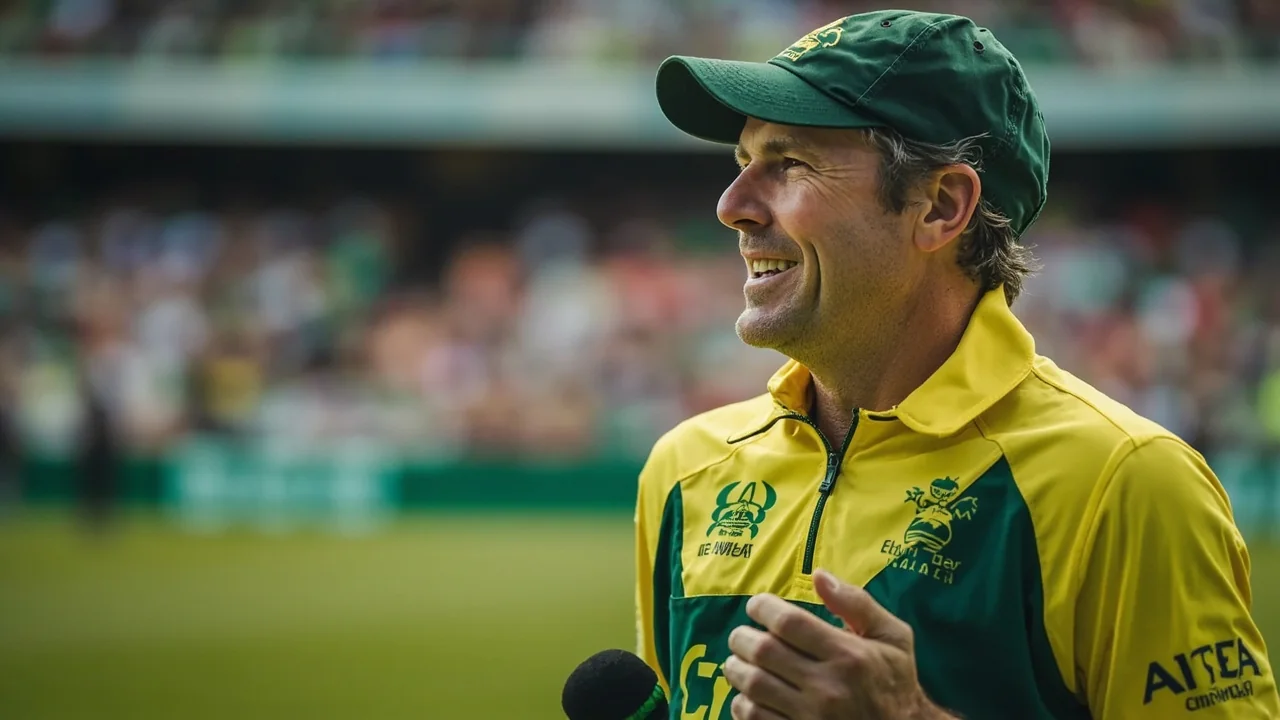
Andrew McDonald has called on the International Cricket Council to raise ODI World Cup squad sizes from 15 to 17 players for the 2027 tournament. The Australia head coach's argument is rooted in the recently finalised format, under which a finalist could play as many as 15 matches — almost a full additional bilateral ODI series layered onto the schedule that elite all-format cricketers already navigate each year.
The Times of India reported on 29 July that McDonald has framed the call as a player-welfare and competitive-integrity issue rather than a selection preference. "The priority is to keep the best players available," McDonald said in remarks the TOI Sports Desk filed from New Delhi, citing the attrition a 15-player squad absorbs across a longer World Cup and the changing conditions teams encounter while moving between South Africa, Zimbabwe and Namibia.
The proposed expansion lands against a familiar backdrop: two of the 2023 finalists were forced into early reshuffles because their star players picked up injuries. Australia lost Travis Head to a first-week concern, and New Zealand missed Kane Williamson for stretches as the tournament moved from Ahmedabad to Mumbai. McDonald's argument is that a 17-player roster — with two additional travelling reserves — would have given both teams a clearer route to keeping those match-winners available through the business end.
The 2027 ODI World Cup is scheduled to run across South Africa, Zimbabwe and Namibia with a format the ICC confirmed last year can stretch a finalist's workload to about 15 matches, more than the 11 matches the 2023 champions played. National boards supporting that expanded bracket now face a downstream question: if the calendar gets longer, the squad math has to follow.
Where the 15-squad cap bites hardest
McDonald singled out the international calendar's grind as the core problem. Australia's white-ball group, like India's, England's and New Zealand's, is no longer a closed unit — players cycle through the Indian Premier League, Major League Cricket, The Hundred, SA20 and domestic four-day cricket, then return to national duty with workloads that few Test-playing nations carried a decade ago. A World Cup squad of 15 leaves one slot of cushion for a long tournament; a squad of 17 leaves room for a planned rotation rather than an emergency replacement.
For coaches, the practical difference is the difference between substituting in a player who has been in the squad throughout and parachuting in a replacement who has had no match-time cushion. The 2026 T20 World Cup in India and Sri Lanka showed the same pattern: several teams arrived with stand-bys who had played no warm-up cricket at the venue and found themselves in XI spots inside the first week of the tournament. Australia and New Zealand were the most-cited examples from the 2023 ODI edition.
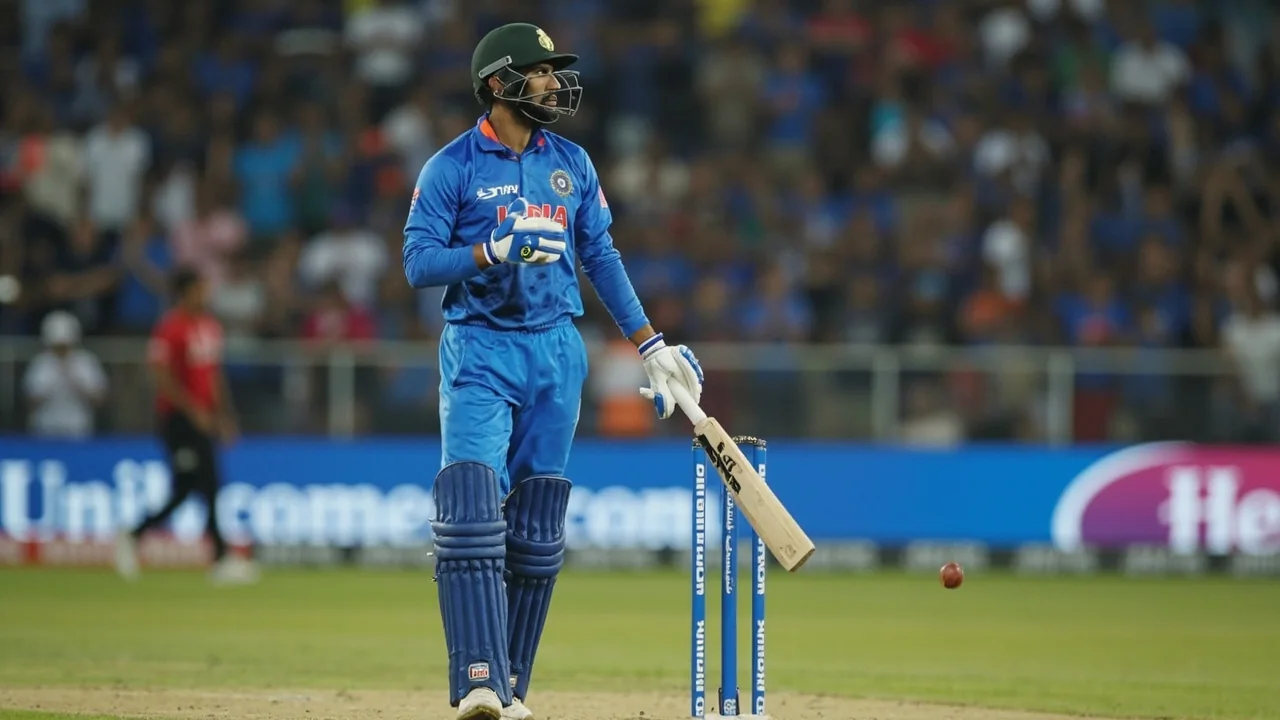
India's situation is the most instructive. A 15-man squad for the 2027 tournament has to cover three formats, a Test transition for younger players, and at least two major ICC events in the same cycle. The selectors' working assumption is that Rohit Sharma, Virat Kohli and Jasprit Bumrah will all be available, but the recent ODI retirements from the all-format pool mean depth is thinner than the surfaces suggest. McDonald's argument reads cleanly through that Indian lens: an extra two slots insures against the kind of soft-tissue injuries that have already ended several elite careers prematurely.
The Associate nations question McDonald raised
McDonald's call also opened a second, less-reported line of argument: the 2027 format's impact on Associate nations. The expanded bracket of 15 matches for finalists concentrates the revenue and attention at the top of the table, while teams in the lower half of the field — including Ireland, Scotland, Nepal and the United States — play a handful of matches each and earn less from ICC prize-money distribution than under the 2023 structure.
"Our question is whether the new format penalises the Associates even though white-ball cricket in those countries has grown," McDonald said, in remarks carried in the TOI report. Ireland's recent elevation to Full Member status and their men's qualification for the 2026 T20 World Cup knockouts make the comment timely. Afghanistan, the Netherlands and Namibia — co-hosts in 2027 — have a similar stake in a schedule that spreads playing time rather than concentrates it.
The ICC's distribution model for the 2027 tournament is still being finalised, but several Associate boards have publicly pushed back against a format that locks them into the first week and a half. McDonald's intervention is the first senior Full Member coach to formally tie squad-size expansion to that broader calendar question, and it raises the political stakes for the ICC's January board meeting, where the squad-cap decision is expected to be confirmed.
What Australia's 2027 squad math already looks like
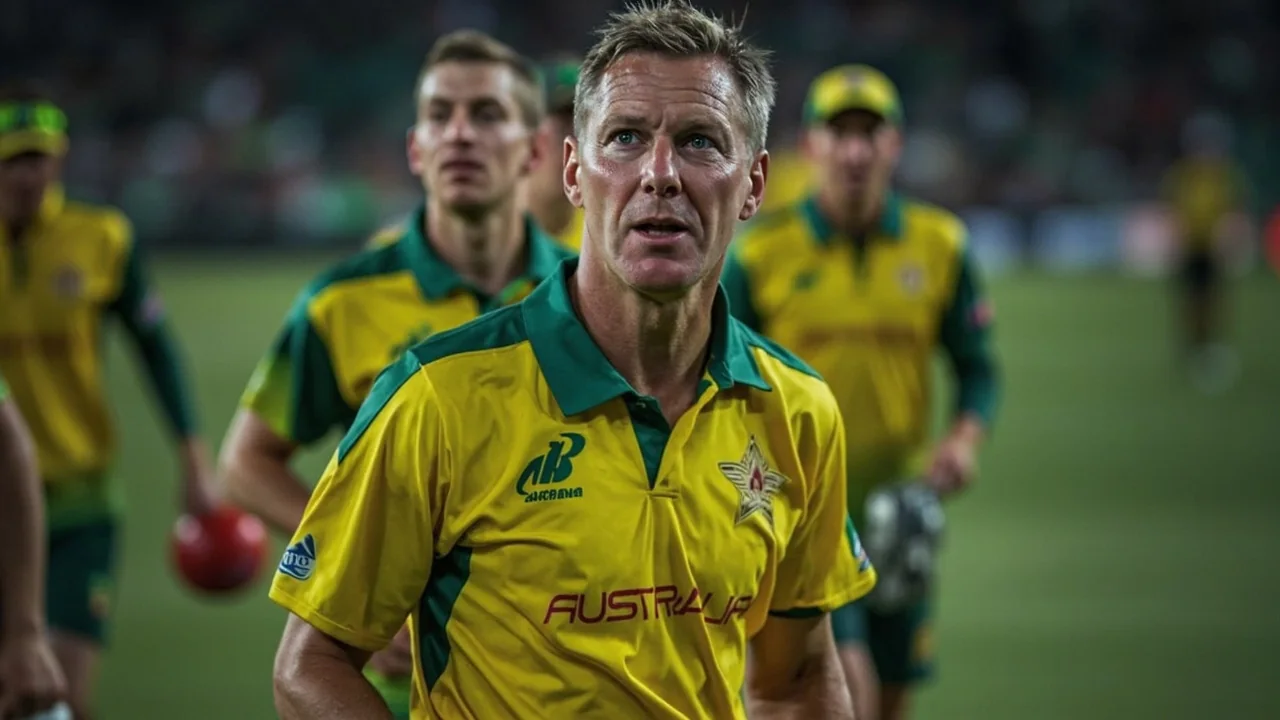
Cricket Australia has not yet named a squad for the 2027 tournament, but the planning frame McDonald is laying down reads as a direct challenge to selectors. Pat Cummins, Mitchell Starc, Josh Hazlewood and Adam Zampa form the bowler spine; Travis Head, David Warner (if available), Steve Smith, Marnus Labuschagne, Glenn Maxwell and Cameron Green cover the batting depth. The XV calculation already leaves two slots for all-rounders and one for backup wicketkeeping, with no margin for a mid-tournament injury to any of the top seven batters.
A 17-player squad would unclog three pressure points at once. First, it would let selectors name two specialist quicks to back up the Cummins-Starc-Hazlewood axis rather than gamble on a single slot. Second, it would restore the conventional slot for a second wicketkeeper, which Australia has historically carried to World Cups and which became politically awkward in 2023 when Alex Carey was the only recognised option behind the stumps. Third, it would let selectors name a third spinner — currently Zampa and a part-timer — rather than convert one of the all-rounders into a front-line bowler.
For T20 and ODI sides fielding through 2026, the same maths applies to India. The current Indian ODI squad operates with 15 players as the working cap, and a similar expansion to 17 would let the Ajit Agarkar-led selection panel name a fourth seamer behind Bumrah, Mohammed Shami and Arshdeep Singh, while keeping Kuldeep Yadav and a second tweaker in the XI without crowding out a finisher like Hardik Pandya.
The window the ICC has to respond
The ICC's next quarterly board meeting is scheduled for January 2027 in Dubai. A final decision on squad sizes, the format and the fixture list for the 2027 ODI World Cup is expected at that meeting, leaving the world's cricket-playing nations roughly six months to align their views. McDonald's public intervention is the most visible of those views yet, and the Australian cricket board is unlikely to be the only Full Member to push for an expanded roster over the next month.
The likeliest outcome is a compromise — a 16-player squad for the league stage and a relaxed replacement rule during the knockouts. That is the structure the ICC trialled at the 2024 Women's T20 World Cup, and a similar arrangement for the men's 50-over tournament would address McDonald's core concern without a wholesale change to the squad cap. The downside is that 16 players still leaves the same single-slot buffer 2023 showed was insufficient.
The likelihood of the ICC holding a clean line at 15 is lower now than it was at the start of July. McDonald's framing — keep the best players available through a longer World Cup — is a politically portable line that several boards, including India's, have a public reason to repeat. Watch the ICC's January board communique for the squad-size figure; that is the headline to track over the next five months.
What to watch from here
Three signals will tell whether the ICC is moving toward McDonald's number. First, the Cricket Australia submission to the ICC's Chief Executives' Committee, expected later this year, will signal the formal language Australia is using. Second, the BCCI's parallel submission — almost certainly citing workload for Bumrah, Shami and the all-format pool — will indicate whether India is using the same argument. Third, the ICC's January 2027 board note will state the cap by number; if the figure is 17, McDonald got what he asked for; if it is 16, a compromise; if it stays at 15, Australia will have argued and lost.
For Indian fantasy cricket players running long-tournament mega contests on Gamezy through the 2027 cycle, the squad math is also a fantasy math question. A 17-player roster gives selectors room to rotate, which means more players will turn out across the league stage, lower captain multiplier concentration, and a wider set of differential picks through the knockout bracket. The full Dream11 prediction slate for the 2027 ODI World Cup, including the squad-cap impact on captain pick windows, runs on the Gamezy cricket news desk as the January board outcome is finalised.
Beyond Australia and India, the 2027 calendar still holds a marquee T20 World Cup and the start of a new World Test Championship cycle. McDonald's intervention is the clearest sign yet that the ODI World Cup's expanded format is forcing a structural rethink at every level — from the squad cap down to the fantasy multiplier bracket — and that the final shape will only be visible once the ICC's January board meeting is in the books. For ongoing coverage of squad decisions, board communiques and fantasy-implication analysis, follow the latest cricket reporting on the Gamezy cricket news desk.
Track every 2027 World Cup squad update
Follow the latest ICC board signals and squad math on the Gamezy cricket news desk.