Home›News›Uthappa Compares Sooryavanshi to Bradman After Zimbabwe Series
2026-07-28By Gamezy Cricket Desk•7 min read
Uthappa Compares Sooryavanshi to Bradman After Zimbabwe Series
Former India batter Robin Uthappa has drawn a Don Bradman comparison for Rajasthan Royals opener Vaibhav Sooryavanshi, arguing the teenager's near-zero LBW record against pace mirrors the body-line treatment Bradman once forced on bowlers, and that an average in the high 40s paired with his strike rate would make him an outlier.
Two-time IPL winner and T20 World Cup champion Robin Uthappa has publicly compared Rajasthan Royals teenager Vaibhav Sooryavanshi to Sir Don Bradman, framing the comparison around how opposition bowlers are already planning body-line spells for a player barely past his senior debut. Uthappa made the remarks on his YouTube channel on Tuesday, the same day Moneycontrol published a curated write-up of the quote.
Sooryavanshi had just finished as the top scorer and Player of the Series in India's three-match T20I tour of Zimbabwe, the assignment India used to rotate the squad after the 0-4 loss in England. The series itself was straightforward on the scoreboard, but Sooryavanshi's stay at the top of the order created a quieter conversation about technique and shot selection that the Uthappa remarks have now amplified.
What Uthappa actually said
Uthappa's comparison rests on a very specific technical observation. Bowlers, he argued, are already treating Sooryavanshi the way bowlers once treated Bradman: by cramping him for room, pushing the length fuller, and aiming at the rib cage rather than the stumps. In Bradman's era that meant body-line. For a 21st-century Indian opener it means an unusually heavy diet of short-pitched bowling and yorker-length testing outside off stump, both designed to give him nothing in his arc.
The follow-on point was about dismissal patterns. Uthappa said Sooryavanshi has a "similar technique to Bradman, where he almost never got out LBW", and that the combination of an average in the high 40s with his boundary rate would mark him as an "outlier" by any historical benchmark. The argument is not that the teenager will finish his career averaging 99.94. It is that his combination of average and strike rate, set against the volume of short-pitched bowling he now receives, places him in a category that previous generations saw only once.
Why the comparison is being read carefully
Comparisons to Bradman carry weight in Australian and English cricket writing that they often do not in the Indian press, where the safer historical referent for a precocious Indian batter is usually Sachin Tendulkar or, more recently, Shubman Gill. Uthappa's choice of Bradman is therefore notable on its own. It signals that his reading of Sooryavanshi's technique is closer to a 1930s English batting-school analysis than to a modern white-ball take, and it sets up a specific testable claim: bowlers will keep trying to bounce him out, and he will keep not getting bounced out.
The India-Zimbabwe series is a small sample for that claim, but it pointed in the right direction. Sooryavanshi top-scored across the three matches, finished as the Player of the Series, and was dismissed in a manner that did not include an LBW. Whether that holds against higher-quality pace attacks in the Asia Cup window or on tours of South Africa and Australia is a different question, and one the selectors will be weighing as they look at the next white-ball squad.
Uthappa's framing of the modern batting era
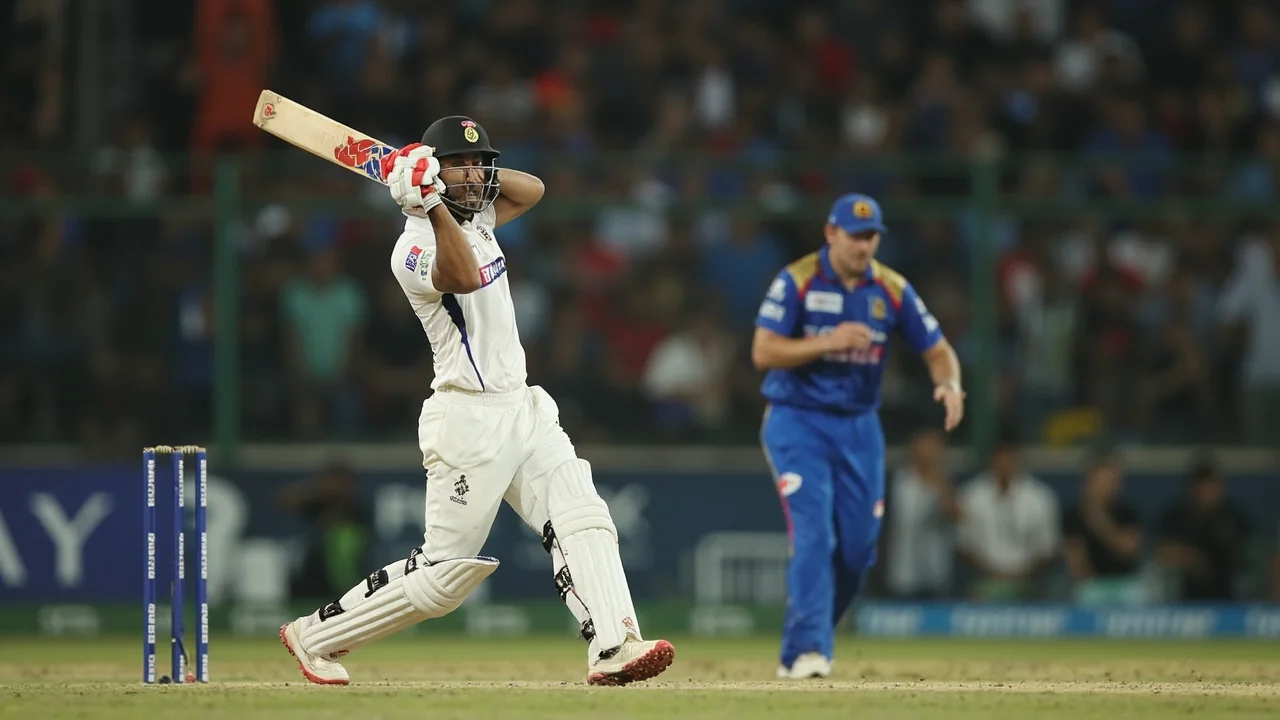
Uthappa did not stop at the Bradman comparison. He used the moment to argue that modern batting outliers — citing MS Dhoni alongside Sooryavanshi, and contrasting both with Tendulkar, Gill and Virat Kohli — are evidence that non-traditional techniques are now genuinely accepted at the top level. The traditional Indian template has been a still head, a straight bat, and weight transfer onto the front foot. Dhoni's bottom-hand finish and Sooryavanshi's willingness to play the pull shot off the front foot against short-pitched bowling both sit outside that template, and both have produced sustained international careers.
The implication is that the BCCI's talent pathways have stopped trying to sand off the rough edges in young batters, and that selectors are now reading the scoreboard instead of the coaching manual. Whether that is true in the high-performance system as a whole is a broader question than any one Player-of-the-Series trophy can answer, but the trend Uthappa is describing — odd technique, top of the order, India cap — is now visible enough to name.
Where the Zimbabwe run actually placed Sooryavanshi
The tour itself was framed as a reset after England's 4-0 win, and the squad was rotated to give senior players rest before the Sri Lanka Test window. Sooryavanshi was one of the players asked to take more ownership at the top of the order, and he did. He ended the series as the leading run-scorer, was named Player of the Series, and gave India's middle order the kind of fast start that had been missing in the England leg.
That context matters for the Bradman framing. The Uthappa remarks arrived the same week that a separate Shreyas Iyer interview described India's "flawless" attitude in Harare, and that same week VVS Laxman framed the Zimbabwe sweep as a measured response to the England loss. The Sooryavanshi story sits inside that wider reading. India used the series to test bench players and reset habits, and Sooryavanshi used it to put himself in the conversation that Uthappa is now extending.
What this means for IPL 2026
For Rajasthan Royals, the Uthappa comparison lands at a useful moment. The IPL 2026 retention and auction cycle has already locked in the franchise core, and the Royals are now working through their batting order for the season restart. Sooryavanshi's role at the top of the order was settled before the Zimbabwe tour; the question after it is how much license the franchise gives him in the powerplay, and whether the Royals adjust their short-ball matchups in the way Uthappa's analysis implies.
Fantasy cricket players who already had Sooryavanshi in their Gamezy squads are watching the same logic. The historical IPL pattern is that young Indian batters picked as openers either consolidate at a 130-140 strike rate or accelerate to a 160-170 strike rate within two seasons. Sooryavanshi has hinted at the higher end of that band, and the body-line tactics Uthappa describes would, on paper, play into a pull-and-cut game that fantasy scoring systems reward. For the broader IPL 2026 build-out, his emergence gives Gamezy users one more differential captain pick option in the early-season Royals fixtures.
How fantasy scoring reads the comparison
Gamezy's fantasy points system rewards fours, sixes and strike rate bonuses more heavily than bowling economy, which is why pre-match reading tends to over-index on young top-order batters in flat-track fixtures. Sooryavanshi's profile — high boundary count, willingness to hit off the front foot against pace, and a near-zero LBW rate — matches that weighting almost exactly. The fantasy implication of the Uthappa remarks is therefore not that Sooryavanshi will suddenly become a captain pick across every fixture. It is that his selection rate in mega contests will rise faster than his ceiling suggests it should, and that the early Royals fixtures of IPL 2026 are where that gap shows up first.
For head-to-head contests, the comparison is more useful as a captain pick anchor than as a points ceiling. Uthappa's specific framing — body-line treatment, no LBW, average-plus-strike-rate outlier — gives fantasy players a checklist for matchup selection. If a Royals fixture pairs them with a pace attack that historically bowls short, Sooryavanshi's captain rating moves up. If the fixture is at a slow surface with two finger-spinners operating, the same checklist argues for caution. The comparison itself is rhetorical, but the read underneath it is concrete.
Where the India camp goes from here
The next checkpoint for Sooryavanshi is the BCCI's squad announcement for the Asia Cup window, expected in the second half of August. If he is retained in the T20I group, the body-line test Uthappa described will arrive almost immediately, because the likely opponents in the Asia Cup group stage include pace attacks that bowl above 140 kph and look for the short ball as Plan A. A 0-for-3 against the new-ball bouncer barrage would dampen the comparison; a Player-of-the-Series run there would lock it in.
For now, the comparison sits where Uthappa placed it: a stylistic observation supported by one strong series and a body of short-format domestic form. The "outlier" framing is what readers will remember, and what fantasy players will weight when they pick their Royals captain. Whether the actual outlier numbers arrive in the Asia Cup or the 2026 IPL restart is the story India will be tracking through the rest of the summer.
What to watch next
Three things will test the Uthappa framing in the coming weeks. First, the Asia Cup squad list will confirm whether India's selectors see Sooryavanshi as a powerplay specialist or a middle-order finisher. Second, the Royals' pre-season fixtures and intra-squad matches will give a read on how the franchise plans to use him in IPL 2026. Third, the early IPL 2026 schedule will show whether other franchises game-plan around him the way Uthappa describes — short-pitched spells, fuller lengths, leg-side fields — or whether they treat him as a conventional young opener.
Source attribution: This report draws on the Moneycontrol article published 28 July 2026 byline Piyush Thapa / curated by Manish Kumar, which carried Robin Uthappa's YouTube remarks and the verified India-Zimbabwe T20I series results. Continue reading the latest cricket analysis on Gamezy's news hub.
Ready to lock your IPL 2026 team?
Join Gamezy today and start playing with our Rs 100 welcome bonus.