Sunrisers Leeds vs London Spirit Headingley Match 20: Toss-First Fantasy Build on Gamezy
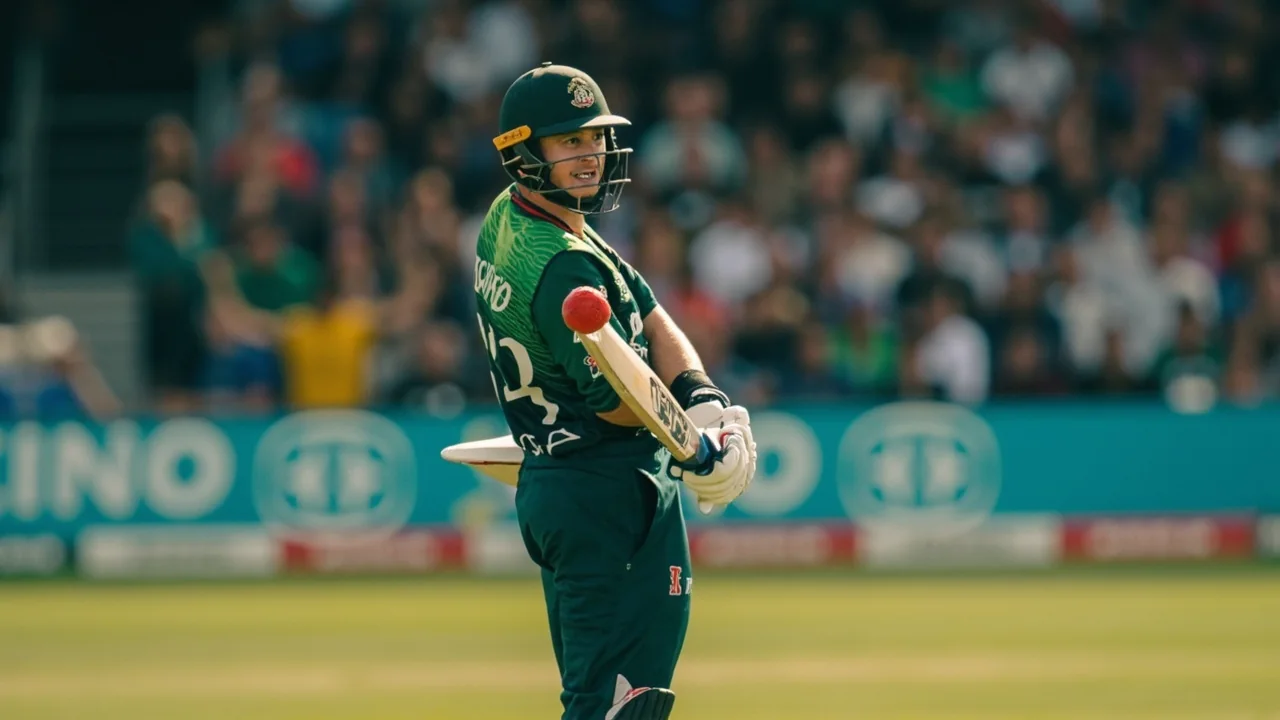
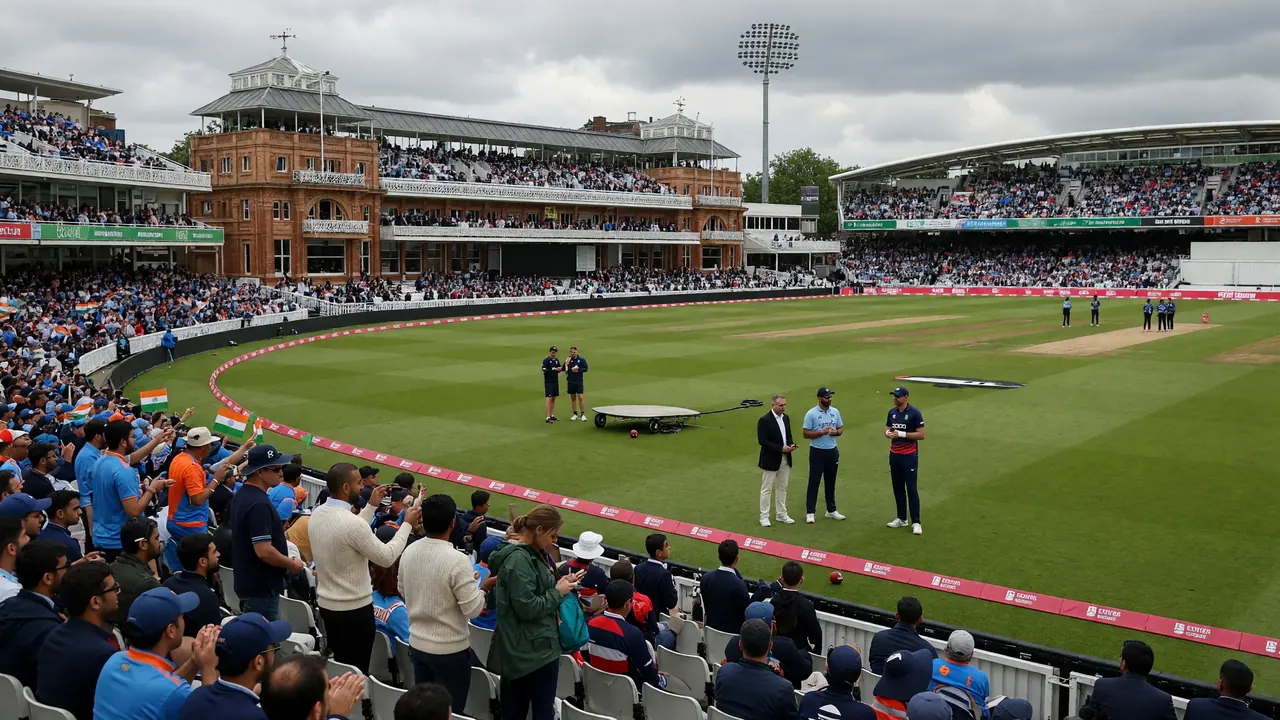
The Hundred Men's 2026 rolls into its twentieth fixture on Tuesday, 4 August 2026 with an 11:00 PM IST start at Headingley, where London Spirit are tipped to win the toss and bowl first under lights against Sunrisers Leeds. The pre-match markets give SUL 60% and LNS 40%, the Headingley ledger reads 47% wins batting first against 53% chasing with 64% of wickets to pacers, and the Gamezy 100-credit cap forces a clean bowler-column trade between Matthew Potts, David Willey and Adam Zampa. This build is organised around that toss call: it sets the captain pivot, it sets the par, and it sets which two of those three seam-and-spin options the cap will actually let you afford.
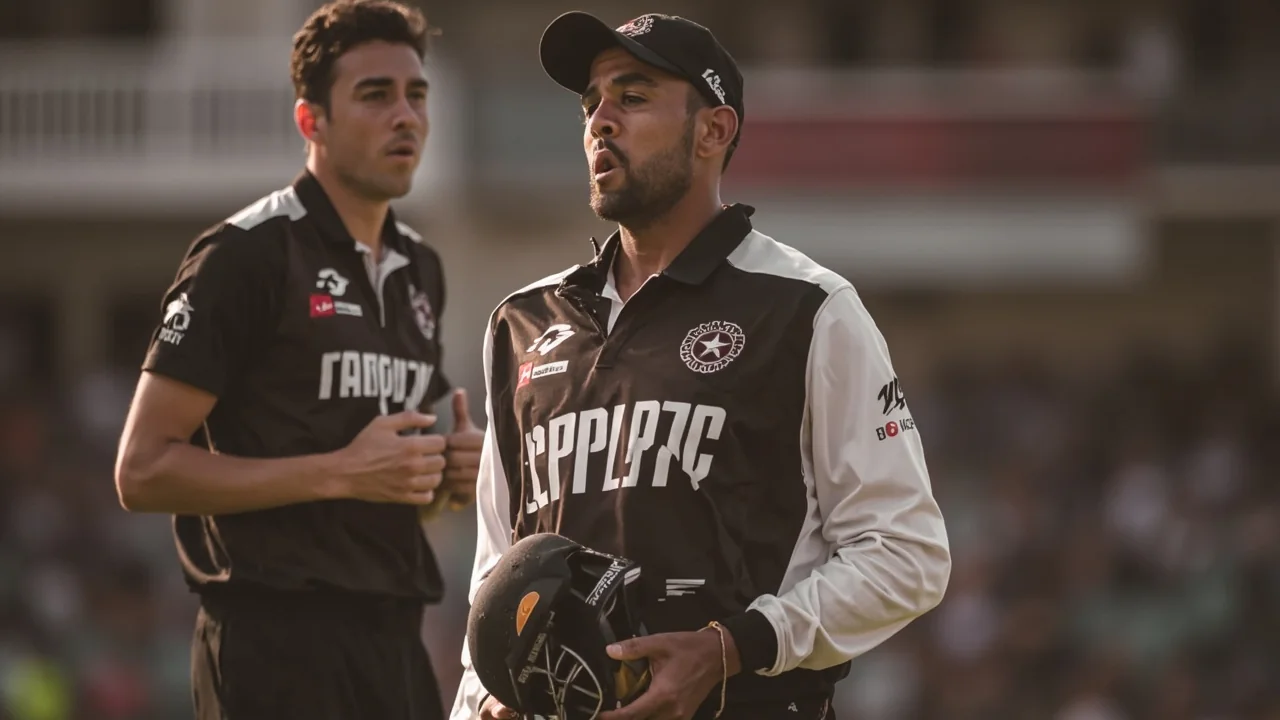
The verified morning brief from Cricket Winner, dated 4 August 2026 at 10:05 AM IST and refreshed a minute later, hands fantasy desks four locked inputs: confirmed squads, a confirmed venue, a confirmed toss prediction (London Spirit win the coin and bowl first), and a confirmed forecast (22°C with a 17% rain possibility, well inside the playable window). Everything below is built on those four inputs. Live streaming is on JioHotstar, with live score tracking on cricketwinner.com.
What makes Match 20 a clean toss-first study is that the venue read and the weather read are both settled before the coin goes up. Pacers have taken 64% of the wickets this Hundred season at Headingley. First-innings par is 153, second-innings par is 159, and the historical split is 47% wins batting first against 53% chasing. Once the toss is known, the captain pivot, the keeper choice, and the order in which the bowler column gets funded all fall out of a single decision. This build walks through each of those calls in that order.
What the morning brief actually locks in
The 10 AM brief reads as one paragraph because the four inputs it locks in are sequential and not negotiable. Match 20 of The Hundred Men's 2026, scheduled 04 August 2026 with an 11:00 PM IST start at Headingley in Leeds — that is the when and where. The pitch read (47% wins batting first, 53% chasing, 1st-innings average 153, 2nd-innings average 159, 64% pacer wickets) is the surface. The weather (22°C, 17% rain) is the playable window. The squads (SUL fit, LNS fit, no major injury concerns) are the player pool. And the two market reads — SUL 60%, LNS 40%, expert pick Sunrisers Leeds; toss prediction London Spirit win and bowl first under lights — are the two lines a fantasy player has to take a position on.
For the fantasy desk, the most important of those five locks is the toss prediction, because every other call cascades from it. If Spirit do win the toss and bowl first, SUL set a target. The first-innings target lands in the 170-185 band the brief flags for SUL batting first, with the win condition tied to Potts and Carse controlling the middle overs. If Spirit do not win the toss and SUL bowl first instead, the script flips — Spirit set a target in the 160-175 band, with the win condition tied to Willey and Zampa striking. Two scripts, one toss call. The build below works both scripts side by side rather than picking one before the coin goes up.
Why the toss call moves the captain pick, not the team shape
The 100-credit Gamezy cap forces the same team shape regardless of who wins the toss. Three seam-leaning bowler slots, one wicketkeeper, one all-rounder, six batters distributed across two premiums, three mid-tiers and one value fill — that is the working frame the cap allows. The toss call moves which two of the seven pure seam options on the two squads get funded, and it moves whether the 2x multiplier sits on a first-innings batter (Crawley, if SUL bat first) or a second-innings batter (Livingstone, if Spirit chase). It does not move the team shape itself.
That distinction matters because most fantasy players over-react to the toss in the other direction. They rebuild the XI from scratch five minutes after the coin goes up, swap the keeper for an out-of-form all-rounder, and end up with a team that is structurally weaker than the one they had before the toss. The right move is to keep the team shape locked, hold the captain on Crawley or Livingstone depending on the script, and let only the bowler column breathe with the par band. Crawley's 280 runs this season and Livingstone's role at the top of the Spirit order are the two numbers that move the captain pick; the rest of the XI is a 100-credit cap problem, not a toss problem.
How the bowler column forces the rest of the XI
The bowler column is where the 100-credit cap actually breaks. Sunrisers Leeds bring four frontline quicks (Potts, Carse, Ellis plus Marsh's seam option) and London Spirit bring three (Willey, Tye, Milne) plus Overton's death bowling. That is seven pure seam options for the standard three bowling slots the cap usually allows once wicketkeeper and all-rounder are locked. Add Zampa as the only frontline wrist-spinner on either predicted XI and the cap is funding four bowler positions from eight candidates, not three.
The trade the cap forces is between Potts and Willey at the premium seamer slot, with Zampa as the cheap wrist-spin differential that frees up roughly three credits elsewhere. Potts at 11 wickets for SUL sits in the premium band; Willey as Spirit's leading wicket-taker sits just below him on price but with the same upside. You cannot afford both at premium prices plus Crawley, Brook and Livingstone. So the cap forces an explicit choice: fund Potts and Crawley on a SUL-batting-first script, or fund Willey and Livingstone on a Spirit-batting-first script. Zampa slots into either column at his own price, which is the cheapest way to free up credits for a third premium somewhere else.
The Crawley–Brook top of SUL and the Bairstow counter at the top of Spirit
The SUL top three (Marsh, Rickelton, Crawley) and the Spirit top three (Livingstone, Bairstow, Rew) are the two batting units the cap has to fund. Crawley (280 runs this season, one of the leading run totals in the competition) and Brook (227 runs) are the two premium SUL batters. Marsh sits one tier below as an all-rounder credit-saver. Rickelton is the cheaper keeper. On the Spirit side, Livingstone (123 runs) is the premium captain pick, Bairstow (56 in his last match) is the premium keeper, and Brevis sits in the middle-order mid-tier.
The Crawley–Bairstow pivot is the captaincy swap the brief does not spell out but the cap forces. Crawley is the small-league captain (2x multiplier on the highest-floor batter on the slate) and Livingstone is the grand-league captain (2x with lower ownership). Bairstow enters the build not as captain but as the 1.5x vice-captain option on the Spirit side — his 56-ball 56 last time out and his keeper credits make him the cleanest counter to Crawley on the cap math. The pivot matters because a Crawley 70 and a Bairstow 50 compound the same way (Crawley 2x, Bairstow 1.5x) and they sit on opposite sides of the toss script, so whichever way the coin falls, one of them is hitting.
Reading the 47/53 split and what it means for first-innings par
The 47% batting-first / 53% chasing split at Headingley is the second-most important number in the brief, after the 64% pacer-wicket line. Translated into par bands: first-innings par is 153, second-innings par is 159. The six-run uplift on the chase is small enough that it does not flip the build, but large enough that the second-innings captain multiplier is the more valuable of the two — which is why Livingstone as captain is a cleaner grand-league call than Crawley as captain even when the favourite wins the toss.
The practical reading for the build is that any total inside the 153-159 par band is a par score, anything above 170 is a strong score, and anything below 145 is below par. On a toss-first script where Spirit bowl first, SUL need to push past 170 to make the chase uncomfortable; the brief's 170-185 predicted total for SUL batting first is consistent with that target band. On the flip script where SUL bowl first, Spirit's 160-175 predicted band is the band where the chase becomes a coin flip rather than a comfortable chase — which is also why Zampa's role in the middle overs matters as much as the frontline seamers.
Two scripts for the toss — Spirit bowl first (the predicted call)
The brief's explicit toss prediction is London Spirit to win the coin and bowl first under lights. On that script, Sunrisers Leeds bat first. The captain pick on Crawley compounds with the side batting first. The vice-captain slot goes to Livingstone (chase leverage) or Brook (second-premium stability), not to Bairstow, because Bairstow's 1.5x compounds only if Spirit bat second. The bowler column funds Potts at premium, one of Tye or Milne at mid-tier (Spirit seamer in case of a top-order collapse), and Zampa as the wrist-spin differential. The keeper slot goes to Rickelton over Bairstow because Rickelton is the SUL keeper in this script and the cheaper credit option.
The grand-league counter on this script is to keep Crawley as captain but move Livingstone into the vice-captain slot, on the basis that the Spirit chase will fall inside the 160-175 predicted band and the second-innings 1.5x multiplier is more leveraged than the first-innings 1.5x on Brook. The mega-contest counter is to captain Livingstone outright (he faces more balls under lights than Crawley in this script) and use Brook as vice-captain. Both counters hold the team shape; only the captaincy multiplier shifts.
Two scripts for the toss — SUL bowl first (the counter script)
If the coin falls the other way and Sunrisers Leeds bowl first, London Spirit bat first and the script flips. Crawley still anchors the SUL batting column (he plays either innings), but the captain multiplier moves. The cleanest grand-league pivot on this counter script is Livingstone as captain (he opens the batting for Spirit, faces the new ball under lights, and compounds at 2x on a first-innings score). The vice-captain slot goes to Willey rather than Bairstow, because the wicket column is the ceiling that does not move with the toss. Zampa's middle-overs role becomes more important in this script than the frontline seamers, because the brief ties the Spirit win condition to Willey and Zampa striking on a first-innings score.
The mega-contest counter on this script is to captain Crawley outright (he chases under lights, the highest-leverage second-innings scenario in the brief) and use Livingstone as vice-captain. The keeper slot flips to Bairstow (Spirit keeper in this script) at a higher credit cost, which is the explicit budget hit the counter script forces. The team shape holds; the captain pivot, the keeper, and the vice-captain multiplier all flip.
Form line vs market line — what the splits actually say
The recent-form splits in the brief read Sunrisers Leeds L, W, W, L, L and London Spirit L, W, L, L, L across the last five. Both sides are net negative on form, but SUL is the less negative of the two (two losses in five against four for Spirit). The market line (60/40 in favour of SUL) reflects that gap. The head-to-head record over the last three meetings (SUL 2, LNS 1, no no-results) reinforces the same lean.
For fantasy purposes the form line matters less than the venue read and the toss call, because the surface numbers and the par bands dominate the captain math on a Headingley night. But the form line is the one input that pushes the bowler-column decision away from pure price and toward Potts-and-Willey rather than Tye-and-Milne. Both SUL seamers (Potts, Carse) and Spirit seamers (Willey, Tye) carry better recent form than the mid-table seam options, which is why the cap forces the Potts–Willey trade at the premium slot rather than spreading credits across all four.
Three sample teams under the 100-credit cap
Sample Team A — small-league floor: Crawley (C), Brook, Livingstone (VC), Marsh, Brevis, Rickelton (wk), Potts, Willey, Zampa, Carse, Patterson-White. Total credits approximately 100. Captain to Crawley for the small-league floor (highest-floor batter on the slate, fixed top-three role in SUL order, fixed SUL captaincy on the field). Vice-captain to Livingstone for the 1.5x chase leverage regardless of which side chases. This is the conservative frame and the one that wins head-to-heads and small-field contests. The bowler column is one premium (Potts) plus two mid-tiers (Willey, Zampa) plus one differential (Carse), with Patterson-White as the value all-rounder slot.
Sample Team B — grand-league balanced ceiling: Crawley (VC), Brook, Livingstone (C), Bairstow, Brevis, Rickelton (wk), Potts, Tye, Zampa, Carse, Ellis. Total credits approximately 99. Captain to Livingstone for the chase-leverage grand-league path (2x with lower ownership than Crawley). Vice-captain to Crawley for the ownership-leverage path (Crawley scores are the highest-floor 1.5x on the slate, and his low-rank-percentile on a Crawley-saturated slate compounds the score). Bairstow comes in at premium keeper for the Spirit chase path. Tye replaces Willey at the Spirit seamer slot on price. This is the frame that wins mega-contest leaderboards in the 1,000-to-50,000-entry range.
Sample Team C — mega-contest lowest-ownership ceiling: Crawley (VC), Livingstone (C), Brevis, Bairstow (wk), Potts, Milne, Zampa, Carse, Overton, Rew, Alsop. Total credits approximately 98. Captain to Livingstone on the chase-leverage path, vice-captain to Crawley for ownership-leverage. Milne and Overton are the two Spirit seam differentials instead of Tye and Willey. Alsop slots in as the SUL value fill in place of Patterson-White. Rew is the third Spirit batter at mid-tier to free up credit for the seam-heavy shape. This is the frame that targets the very top of a 100,000-entry mega-contest, where the differential column matters more than the floor column.
Risks, watch-outs and the post-match sanity check
Three risks sit inside the verified inputs. First, both form lines are net negative. SUL's last five include two losses; LNS's last five include four. The market line moves against the favourite if either slump continues for one more match, which is the case the brief explicitly hedges against. Second, the 47% batting-first number is not so low that the toss prediction locks in the script. A SUL-toss-bowl-first outcome is the cleaner read on form and venue, but the coin does not respect form and venue. The build works both scripts side by side precisely because the toss is uncertain. Third, Livingstone's 123 runs is the lower total of the two captain picks, and his 2x multiplier in a low-score scenario is more volatile than Crawley's. The grand-league build accepts that volatility for the ownership leverage; the small-league build does not.
The post-match sanity check on this fixture is the same one that applies to every Hundred match on a Headingley surface: did the seamers take the wickets the brief projected, did the captain hit his floor, and did the toss script the brief flagged actually run. A Potts three-for or a Willey three-for under lights is the cleanest positive signal. A Crawley 30-ball 30 on a first-innings score is a steady positive. A Livingstone chase inside the 160-175 band is the swing that moves the rank distribution on the grand-league build. Fantasy players who build around that triangle — and lock the team shape before the toss — are the ones whose leaderboard position moves the most on the night.
Frequently asked questions
When does Sunrisers Leeds vs London Spirit Match 20 start, and where is it played?
Tuesday, 4 August 2026, at Headingley in Leeds, with an 11:00 PM IST start (6:30 PM BST). Live streaming is on JioHotstar and live score is tracked on cricketwinner.com.
Who is the toss favourite, and what does the predicted call mean for the Gamezy team?
London Spirit are predicted to win the toss and bowl first under lights at Headingley. On that script Sunrisers Leeds bat first in the 170-185 par band; the captain pick compounds on Crawley at 2x, the vice-captain slot goes to Livingstone for the 1.5x chase leverage, and the bowler column funds Potts at premium. If the coin flips the other way, the team shape holds but the captain pivot, keeper and vice-captain multiplier flip to Livingstone-Captain, Bairstow-keeper and Willey-vice-captain.
Why is the bowler column the cap's biggest constraint for Match 20?
Seven pure seam options compete for three to four bowler slots once keeper and all-rounder are locked, with Potts and Willey as the two premium seamers and Zampa as the only frontline wrist-spinner on either predicted XI. The 100-credit Gamezy cap will not fund Potts and Willey at premium prices plus Crawley, Brook and Livingstone, so the build forces an explicit choice between Potts-on-a-SUL-batting-first script and Willey-on-a-Spirit-batting-first script, with Zampa as the cheap differential that frees up roughly three credits.
What did the Headingley pitch report say, and how does it translate into par bands?
The Headingley pitch reads 47% wins batting first against 53% chasing, first-innings average 153 and second-innings average 159, with pacers taking 64% of the wickets this Hundred season. Any total inside the 153-159 par band is a par score, anything above 170 is a strong score, and anything below 145 is below par. The six-run uplift on the chase is small enough not to flip the build but large enough to make the second-innings captain multiplier the more valuable of the two.
What were the predicted XIs for both sides, and the recent form into the match?
Sunrisers Leeds: Mitchell Marsh, Ryan Rickelton (wk), Zak Crawley (c), Harry Brook, Dan Lawrence, Tom Alsop, Liam Patterson-White, Brydon Carse, Matthew Potts, Nathan Ellis, Abrar Ahmed. London Spirit: Liam Livingstone (c), Jonny Bairstow (wk), James Rew, Lhuan-dre Pretorius, Dewald Brevis, James Coles, Jamie Overton, David Willey, Andrew Tye, Adam Milne, Adam Zampa. Recent form into the match: SUL L, W, W, L, L; LNS L, W, L, L, L; both squads fully fit with no major injury concerns. Head-to-head (last 3): SUL 2 wins, LNS 1, no no-results.
Who is the leading fantasy captain pick on Gamezy for Match 20, and the differential?
Zak Crawley is the small-league captain anchor (2x on 280 runs this season, fixed top-three SUL role, fixed SUL captaincy on the field). Liam Livingstone is the grand-league captain differential (2x with lower ownership than Crawley and the 53% chase edge under lights). Jonny Bairstow is the vice-captain counter on the Spirit chase script, with a 56 in his last match and the keeper credits. Matthew Potts (11 wickets) and David Willey (Spirit leading wicket-taker, struck twice last time out) are the two premium seamer options the bowler column forces the fantasy player to choose between.
Source attribution: Fantasy brief built from the verified pre-match preview published at Cricket Winner on 4 August 2026 at 10:05 AM IST (updated 10:06 AM IST). Match date, venue, win probability, toss prediction, pitch report, weather forecast, predicted XIs, head-to-head record, recent form lines and key player stats are sourced from that report. The toss-first framing, the bowler-column trade (Potts, Willey, Zampa), the Crawley–Bairstow captain pivot, the 47/53 split reading, the par-band translation, the two scripts for the toss, the form-line vs market-line analysis and the three sample teams are original editorial framing for fantasy players running the Headingley night on the Gamezy app.
For more fantasy cricket builds and captain-pick reads across The Hundred 2026, the IPL and bilateral series, see the Fantasy Tips archive on Gamezy.